Why a Daily Walk Can Help You Feel Better
October 14, 2026
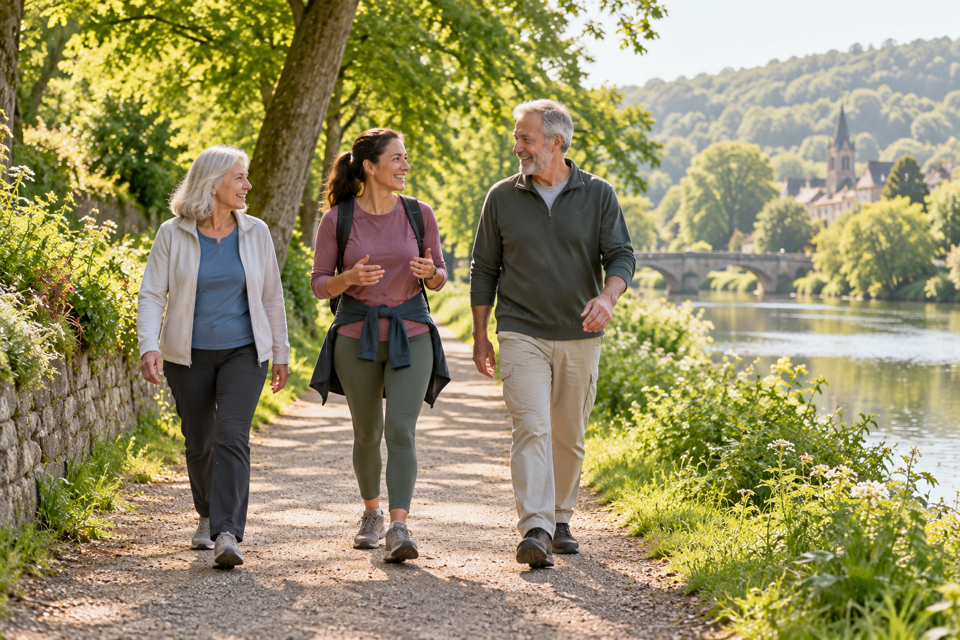
A daily walk does not have to be long, fast or impressive to be worthwhile. It might be a circuit of the block, a trip to the store or a few minutes along an indoor hallway. It is an easy way to add a little movement to your day, and even a little is better than none. The World Health Organization emphasizes that all physical activity counts, including movement for transport, work and leisure.
You do not have to keep a perfect streak. The goal is to find a habit you can enjoy and keep coming back to. The advice here is a starting point for adults. If your health makes exercise difficult, your own healthcare professional can help you adapt it.
Give your heart a little regular work
When you walk briskly, your heart beats a little faster and you breathe more deeply. Done regularly, activity at this level helps you look after your heart and lowers the risk of problems such as heart disease, stroke and type 2 diabetes. It cannot promise you will never become ill, but it is something useful you can do for your health.
One study followed 106 adults who had not been very active. After 12 weeks, those asked to walk briskly three or five days a week had improved blood pressure and did better on a walking test. The group not asked to follow that routine did not show those changes. It is a good reason to give a steady walking habit a try.
Short walking breaks may help too. In a small study of 19 middle-aged adults with overweight or obesity, getting up for two-minute walks every 20 minutes helped reduce the rise in blood sugar and insulin after a test drink. Both gentle and somewhat faster walks helped. You do not need to follow that exact schedule; the study gives us another reason to break up long spells of sitting.
So, alongside your planned walk, look for chances to get up during the day. Walk to the kitchen, take a short break from your desk or do an easy lap indoors. The benefits are not limited to what happens on the scales.
You do not need a perfect step count
A step counter can be helpful, but you do not have to turn walking into a numbers contest. A 2019 study of older women found that women who took more daily steps were less likely to die during the follow-up period, including at totals below 10,000 steps. It did not establish a universal target for every adult.
Use your current routine as a starting point. Notice whether you can add a comfortable outing, spend less of the day sitting or gradually walk a little farther. A tracker is most helpful when it encourages a habit you can sustain rather than making an easier day feel like failure.
Stay stronger for everyday life
Walking helps your legs stay active and builds the stamina you use in daily life. Getting to the shops or keeping up on a family outing may become a little easier. Your muscles also need work that challenges their strength, such as suitable exercises with bands, weights or your own body weight. That matters more as we get older.
Your feet and legs carry your weight when you walk, which gives your bones some useful work to do. Strength exercises can help too. Walking will not reverse osteoporosis or guarantee that you will avoid a fracture. If you have osteoporosis, ask about exercises that are safe for you before starting something new.
Think of walking, strength and balance as partners. Walking builds stamina, strength work helps your muscles, and balance practice is especially useful for older adults. Together, they help you stay capable in everyday life and can lower the risk of falls.
A break for your mind—and a chance for company
A walk can offer a manageable break from a demanding day. The CDC notes that activity that gets you breathing harder can reduce anxiety in the short term. A regular routine can also help with sleep and mental wellbeing. You may feel better after a walk, but do not worry if every outing does not produce an immediate lift.
Walking can also create an opportunity for company. A regular outing with a friend or a welcoming walking group may provide conversation, encouragement and a reason to leave the house. NHS guidance suggests group activity as one option for meeting people and addressing feelings of loneliness. A walk will not solve loneliness on its own, but it can be a comfortable way to spend time with someone.
You might arrange a short, unrushed meeting rather than a distance challenge. Ask about pace, benches and accessibility before joining a group. And if you need a little peace and quiet, going on your own is fine too.
Walking can be part of looking after your mental health, but it is not a replacement for care. If low mood or anxiety is making daily life difficult, ask for professional help. Keep following any treatment you have been prescribed.
Short strolls and brisk walking both have a place
You can take a short brisk walk or a long gentle one. Both get you moving, but brisk walking works your heart and breathing harder. That is the kind that counts towards the usual weekly goal for moderate exercise. A gentle stroll is still worthwhile, especially if you would otherwise be sitting.
To judge a brisk pace, try the talk test: you should be able to talk, but not comfortably sing. Your breathing and heart rate will be noticeably higher. You do not need to aim for a particular speed. What feels easy to someone else may be hard work for you, and that is all right.
CDC recommends at least 150 minutes of moderate-intensity aerobic activity each week, plus muscle-strengthening activity on at least two days. WHO places the moderate-activity recommendation at 150–300 minutes weekly for substantial benefits. Work towards these goals at your own pace. You still benefit from doing less while you are getting started.
Thirty minutes on five days is one arrangement, not a rule. Shorter bouts can be added together, and activity does not need to last ten minutes before it counts. Other suitable activities can contribute alongside walking.
Strengthening should involve the major muscle groups, not only the legs. Depending on your abilities, options include resistance bands, weights and body-weight exercises. Chair sit-to-stands and wall push-ups are possible starting movements, rather than a complete program by themselves. Older adults should include appropriate balance practice too.
Start small and build slowly
If you have been inactive, begin with an amount that feels manageable—even a few minutes. Build up over weeks or months instead of trying to reach the full weekly goal straight away.
For example, you might begin with five comfortable minutes near home. Repeat that until it feels manageable, then try a slightly longer outing. Later, consider adding a brief brisk section between easier walking. Stay with each stage until it feels comfortable. There is no deadline. Try adding a little distance before also making the walk faster or hillier.
Make the routine work for your body and your circumstances. Short bouts, rest stops, accessible indoor spaces or an appropriately fitted mobility aid may make movement more practical. If walking is unsuitable, wheeling, aquatic activity or adapted exercise can provide alternatives. CDC advises adults with disabilities who cannot meet the full guidelines to be active according to their abilities, with professional guidance where needed.
Dress comfortably and look after your feet
For an ordinary short walk, you usually do not need special clothes. Choose clothes that allow comfortable movement and shoes that support your feet without rubbing. Longer outings or challenging terrain may call for different equipment, but buying new gear is not a prerequisite for starting.
When buying shoes, try them with the socks you expect to wear. Check toe room, heel security and width—not just the size printed on the box. NHS footwear guidance recommends roughly a thumb’s width beyond the longest toe. Your toes should not be squeezed, and the heel should be held comfortably rather than sliding excessively.
Check the sizing advice for the shoe you want, but remember that a size label cannot tell you how it will feel on your foot. Brooks, for example, offers several widths and notes that fit varies between designs. Trying shoes in person can help; for online purchases, check the seller’s return conditions before committing. No brand or cushioning style fits everyone.
Adjust the walk to the weather. In heat, choose cooler hours, wear light clothing, use sun protection and have water available. Check heat and air-quality alerts. In cold or wet conditions, use adjustable layers and weather protection; avoid icy surfaces and move indoors when conditions are unsafe. If it is unsafe outside, walk indoors or wait for better weather. You have nothing to prove.
Related gear: Nalgene 32 oz Wide Mouth water bottle on Amazon. We're a small, independent business. If you buy through our Amazon links, Amazon pays us a small commission. You don't pay a penny more, and it helps us keep bringing you better, honest content. Thank you for supporting us. As an Amazon Associate I earn from qualifying purchases.
When to stop and seek help
Moderate exercise is safe for most adults. If you have a long-term health condition or a disability that affects walking, ask your healthcare professional what would suit you.
Stop walking if you develop chest discomfort, dizziness, unusual breathlessness or a pounding or irregular heartbeat. Call 911 for possible heart-attack symptoms, including chest pressure or pain, especially with shortness of breath, cold sweating, faintness or discomfort spreading to the arm, back, neck or jaw. Do not try to walk it off. Collapse or severe breathing difficulty also requires emergency help.
Arrange medical advice for recurring or worsening foot pain, pain that interferes with normal activities, or new numbness. Severe pain or inability to walk needs urgent assessment. If you feel faint or weak in hot weather, stop and get somewhere cool.
Start with a walk you can comfortably manage. Enjoy it, rest when you need to, and try again another day. Over time, those ordinary outings can become a habit that helps you feel better and stay more active. That is a good reason to step out of the door.
Sources
- Pain in the bottom of the foot - NHS
- 6. Stop at once if you feel unwell during exercise or have chest pain or discomfort, dizziness, breathlessness that prevents you from speaking comfortably, or a pounding or irregular heartbeat.
- Adding Physical Activity as an Adult | Physical Activity Basics | CDC
- Heat and Athletes | Heat Health | CDC
- How do I know which width to choose? – Brooks Running
- Find the Perfect Shoe for Your Foot Width | Brooks Running
- Walking for health
- Increasing Physical Activity among Adults with Disabilities | Disability and Health | CDC
- Physical Activity Guidelines for Americans, 2nd edition
- What Counts as Physical Activity for Older Adults | Physical Activity Basics | CDC
- Adult Activity: An Overview | Physical Activity Basics | CDC
- What Counts as Physical Activity for Older Adults | Physical Activity Basics | CDC
- Physical activity
- Treatment - Depression in adults
- Be active for your mental health - Every Mind Matters - NHS
- Benefits of Physical Activity | Physical Activity Basics | CDC
- Osteoporosis - Prevention
- Association of Step Volume and Intensity With All-Cause Mortality in Older Women - PubMed
- Breaking up prolonged sitting reduces postprandial glucose and insulin responses - PubMed
- Randomised controlled trial of home-based walking programmes at and below current recommended levels of exercise in sedentary adults - PubMed
- Nalgene 32 oz Wide Mouth water bottle on Amazon